I do most of the meal preparation in our house. However, my husband takes over the dinner planning every now and then. That’s a terrific help. The problem is that he never follows a recipe, and he creates unusual formulas for the dishes he prepares. For example, the other night he announced that he was making dinner.
“I’m making jambalaya tonight,” he yelled from the living room.
“What are you putting in it?” I inquired.
“You know, the usual; sausage, chicken, peppers, rice, and broccoli rabe,” he responded.
Okay, so now it’s not jambalaya, it’s something else entirely. There’s no broccoli rabe in jambalaya. I don’t know who decides what goes into a dish to make it authentic and original, but I think they came to that conclusion through trial and error. And, it seems to work well.
Broccoli rabe doesn’t belong in jambalaya.
Just like one day, Nick announced he was going to make eggplant Parmigiano. “Except instead of eggplant, I’m using zucchini, and instead of mozzarella, I’m using feta cheese.”
“So, you’re not really making eggplant Parmigiano,” I deduced.
“Well, yeah, I am. I’m just substituting some things,“ he said with indignation.
“You’re substituting everything. There’s nothing eggplant about it, and there’s nothing Parmigiano about it,” I informed him with a tone that implied that he didn’t know what the heck he was talking about and that I was sick and tired of this scenario, but with love.
At what point does one inject one’s own creativity to a dish and yet still maintain the integrity of the original recipe?
I think it’s somewhat like jazz. Even though there is improvisation and interpretation, the underlining melody still runs through the song. The tune remains within the parameters of the interpretation.
On that note, and it’s a high one, here is an interesting interpretation of caviar:
Cowboy Caviar ala Brokeback Mountain
One can (15.5 oz.) black beans, drained and rinsed
One can (2.25 oz.) sliced black olives, drained and chopped
1/4 cup chopped onion
1 jalapeno, seeded and chopped
2 tablespoons olive oil
2 tablespoons lime juice
1 clove garlic, chopped
1/4 teaspoon ground cumin
1/4 teaspoon salt
1/4 teaspoon cayenne pepper
Dash of freshly ground black pepper
One package (8 oz.) cream cheese, at room temperature
Chopped cilantro for garnish, optional
Assorted crackers for serving
Mash black beans slightly and place in a medium-size bowl. Add black olives, onion, jalapeño, olive oil, lime juice, garlic and spices. Mix well. Refrigerate, covered, for at least 2 hours.
Spread cream cheese evenly over the bottom of a 9-inch pie plate. Spread the bean mixture over the top. Garnish with cilantro if using and serve with crackers.
Meatloaf, But Not Really
You can substitute cheddar for the feta cheese.
2-pound head of cabbage
2 small onions, diced
1 tablespoon oil
12 ounces ground beef (I like to use chuck)
1/2 teaspoon salt
1 teaspoon paprika
3 tablespoons ketchup
1/2 cup beef broth
2 1/2 oz. feta cheese
2 eggs
1 cup milk
Cut cabbage into quarters. Remove core and shred remaining cabbage.
Heat oil in a large skillet or Dutch oven; add onions and sauté to a light brown. Add ground beef and sauté for another 5 minutes. Add broth, cabbage, paprika and ketchup to meat mixture and braise over medium heat for 30 minutes until meat loses its pinkness and cabbage is wilted.
Grease a baking dish or casserole dish with butter and dust with breadcrumbs. Fill with the hot beef and cabbage mixture. Sprinkle with cheese.
Beat eggs with milk and pour over the meat. Place in preheated 400° oven and bake for 45 minutes. Serve with mashed potatoes. Serves 4.
Thursday, January 26, 2006


Thursday, January 12, 2006
Nik Knack
Recently, I was pouring through the New York Times food section and there it was: a recipe for potatonik. I let out a scream of joy. I’ve been looking for a recipe to replicate that wonderful steamy concoction of my youth for such a long time and there it was in front of my eyes.
Living in the Brighton Beach section of Brooklyn for many years, I was fortunate enough to live within walking distance of Mrs. Stahl’s knish store. For those of you unfamiliar with this Jewish delicacy, a knish is delicious handheld mashed potato pie. A piece of dough is filled with mashed potatoes, kasha, or other vegetables, and baked. I’ve never seen any filled with meat, though I have heard of chopped liver knishes. I’ll pass, though.
Mrs. Stahl’s offered potato, spinach, kasha, mushroom, and cabbage knishes, as well as blueberry-cheese and cherry-cheese knishes (the cheese was cream cheese).
I would stop into Mrs. Stahl’s shop when returning home from work and trudging down the many steps of the D train subway station on Brighton Beach Avenue. Not a regular item on the menu, but sometimes available when I was lucky, was potatonik.
This item was a masterpiece in the knish world. A potatonik is a dense, crusty Eastern European potato kugel (pudding) made with yeast, baked in a pan with lots of oil, and cut into individual square pieces. It was spiced with loads of ground pepper and steaming hot, and when it was passed to me in a piece of waxed paper dripping with oil, I was in heaven. In the winter, walking the few blocks to my apartment, that hot little square of heaven kept my hands and my tummy warm and comforted.
Since leaving Brooklyn, I’ve been searching cookbooks and the internet for a potatonik recipe to no avail. I had an idea I could improvise by making a potato pudding or a giant latke (pancake), but it wouldn’t really satisfy me like an authentic recipe would.
This is such a wonderful way to start off the New Year, and I have loads of potatoes left over from Hanukkah to get started on my potatonik. Now if I could only find a recipe for cabbage knishes, my favorite and the most obscure of all the knish varieties.
Potatonik
1 package active dry yeast (2 1/2 teaspoons)
1/4 cup warm water
1/4 teaspoon sugar
6 large potatoes, peeled
1 large onion
2 eggs
2 tablespoons vegetable oil
1 tablespoon salt
1/2 teaspoon or to taste freshly ground black pepper
2 1/2 cups all-purpose flour
Additional oil
Dissolve yeast, water and sugar in a measuring cup. Let rest 10 minutes, until foamy.
Meanwhile, grate potatoes and onion by hand or in a food processor. If you want to have an authentic potatonik, grate the vegetables by hand and make sure you get some of your knuckles, as well.
In a large bowl, blend eggs, the 2 tablespoons of the oil, salt and black pepper. Stir in the grated potatoes and onion. Add flour and the dissolved yeast; mix well. Mixture will be thick. Cover bowl with plastic wrap and let rise in a draft-free area for about 1 hour. It will rise and get somewhat puffy.
Pour vegetable oil into a 9x12-inch rectangular baking pan to a depth of about 1/4-inch. Pour in the batter. The oil will come up and over the batter. This is good. Let the batter rest for about 20 minutes.
Meanwhile, preheat oven to 375°F. Bake potatonik on the middle rack for 45 minutes. Dip a paper towel into some more vegetable oil and pat the top of the potatonik with the oil bake another 10 to 15 minutes, until golden brown and crusty. Serve hot. Serves 12 or 6 Jews from Brooklyn.
Note: potatonik can be refrigerated for several days or frozen for 1-2 weeks. Reheat at 325° until warm, or develops a hard crust.
Living in the Brighton Beach section of Brooklyn for many years, I was fortunate enough to live within walking distance of Mrs. Stahl’s knish store. For those of you unfamiliar with this Jewish delicacy, a knish is delicious handheld mashed potato pie. A piece of dough is filled with mashed potatoes, kasha, or other vegetables, and baked. I’ve never seen any filled with meat, though I have heard of chopped liver knishes. I’ll pass, though.
Mrs. Stahl’s offered potato, spinach, kasha, mushroom, and cabbage knishes, as well as blueberry-cheese and cherry-cheese knishes (the cheese was cream cheese).
I would stop into Mrs. Stahl’s shop when returning home from work and trudging down the many steps of the D train subway station on Brighton Beach Avenue. Not a regular item on the menu, but sometimes available when I was lucky, was potatonik.
This item was a masterpiece in the knish world. A potatonik is a dense, crusty Eastern European potato kugel (pudding) made with yeast, baked in a pan with lots of oil, and cut into individual square pieces. It was spiced with loads of ground pepper and steaming hot, and when it was passed to me in a piece of waxed paper dripping with oil, I was in heaven. In the winter, walking the few blocks to my apartment, that hot little square of heaven kept my hands and my tummy warm and comforted.
Since leaving Brooklyn, I’ve been searching cookbooks and the internet for a potatonik recipe to no avail. I had an idea I could improvise by making a potato pudding or a giant latke (pancake), but it wouldn’t really satisfy me like an authentic recipe would.
This is such a wonderful way to start off the New Year, and I have loads of potatoes left over from Hanukkah to get started on my potatonik. Now if I could only find a recipe for cabbage knishes, my favorite and the most obscure of all the knish varieties.
Potatonik
1 package active dry yeast (2 1/2 teaspoons)
1/4 cup warm water
1/4 teaspoon sugar
6 large potatoes, peeled
1 large onion
2 eggs
2 tablespoons vegetable oil
1 tablespoon salt
1/2 teaspoon or to taste freshly ground black pepper
2 1/2 cups all-purpose flour
Additional oil
Dissolve yeast, water and sugar in a measuring cup. Let rest 10 minutes, until foamy.
Meanwhile, grate potatoes and onion by hand or in a food processor. If you want to have an authentic potatonik, grate the vegetables by hand and make sure you get some of your knuckles, as well.
In a large bowl, blend eggs, the 2 tablespoons of the oil, salt and black pepper. Stir in the grated potatoes and onion. Add flour and the dissolved yeast; mix well. Mixture will be thick. Cover bowl with plastic wrap and let rise in a draft-free area for about 1 hour. It will rise and get somewhat puffy.
Pour vegetable oil into a 9x12-inch rectangular baking pan to a depth of about 1/4-inch. Pour in the batter. The oil will come up and over the batter. This is good. Let the batter rest for about 20 minutes.
Meanwhile, preheat oven to 375°F. Bake potatonik on the middle rack for 45 minutes. Dip a paper towel into some more vegetable oil and pat the top of the potatonik with the oil bake another 10 to 15 minutes, until golden brown and crusty. Serve hot. Serves 12 or 6 Jews from Brooklyn.
Note: potatonik can be refrigerated for several days or frozen for 1-2 weeks. Reheat at 325° until warm, or develops a hard crust.
Thursday, December 01, 2005
10/6+7+5
I’ve found that cooking potatoes is a lot like cooking pasta: it just doesn’t look like enough in the pot, so you keep adding more and in the end you have more than you need.
This happened on Thanksgiving Day. In preparation of Thanksgiving dinner for 14 sailors, my daughter and her roommate, my husband and I went shopping with our list at the Navy commissary. This was an experience in itself.
Unfortunately, every Navy family near the commissary had the same idea the day before us. It was slim pickings on the sweet potatoes, parsnips and white potatoes.
Slim pickings really don’t describe the sweet potato situation. I don’t know what it is about West Coast sweet potatoes, but they were as large as pumpkins. I had planned on making whole roasted sweet potatoes, cutting a little slit on the top and placing a large marshmallow inside to melt in the final few minutes of roasting time. Nice presentation, but it doesn’t work with a 7-pound sweet potato.
I had us all rummaging through the bin of monster sweet potatoes to find the smallest available. We came away with 6 medium-size sweet potatoes.
That evening, after making the pumpkin pies and stuffing, I fretted over the sweet potato situation and convinced my daughter we should go to another store to look for more sweet potatoes.
We did and we returned with 7 more potatoes of normal size.
The next morning as we prepared the roasted vegetables and soup, my husband announced he was going to the store for flowers and other last minute items. Of course, I asked him to bring back more sweet potatoes.
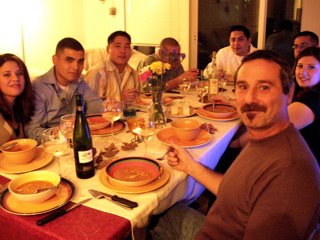
The final count was 18 sweet potatoes. The final count around the dinner table was 10.
Take the above scenario and repeat it for white potatoes for garlic roasted mashed potatoes. There were enough potatoes to feed, well, the Navy.
I’ve always felt, especially when preparing Thanksgiving dinner that it’s better to have too much than not enough. Now, that’s something to be thankful for.
Mashed Potatoes with Lemon-Thyme Butter
10 tablespoons butter at room temperature
4 teaspoons minced fresh thyme or 2 teaspoons dried
1 tablespoons minced lemon zest
4 pounds russet or Yukon gold potatoes, cubed
1 1/2 cups half-and-half
Mix the butter, thyme, and lemon zest in a small bowl. Season with salt and pepper. Place potatoes in a large pot and cover with cold water. Bring to a boil. Cover partially and cook until potatoes are very tender, about 20 minutes. Drain. Return potatoes to the same pot and mash. Heat half-and-half in a small saucepan over medium heat until hot; stir into potatoes. Set aside 2 tablespoons of the lemon-thyme butter. Mix remaining seasoned butter into potatoes. Season to taste with salt and pepper. Transfer mashed potatoes to a large bowl. Top with the remaining 2 tablespoons lemon-thyme butter and serve hot. Serves 10.
This happened on Thanksgiving Day. In preparation of Thanksgiving dinner for 14 sailors, my daughter and her roommate, my husband and I went shopping with our list at the Navy commissary. This was an experience in itself.
Unfortunately, every Navy family near the commissary had the same idea the day before us. It was slim pickings on the sweet potatoes, parsnips and white potatoes.
Slim pickings really don’t describe the sweet potato situation. I don’t know what it is about West Coast sweet potatoes, but they were as large as pumpkins. I had planned on making whole roasted sweet potatoes, cutting a little slit on the top and placing a large marshmallow inside to melt in the final few minutes of roasting time. Nice presentation, but it doesn’t work with a 7-pound sweet potato.
I had us all rummaging through the bin of monster sweet potatoes to find the smallest available. We came away with 6 medium-size sweet potatoes.
That evening, after making the pumpkin pies and stuffing, I fretted over the sweet potato situation and convinced my daughter we should go to another store to look for more sweet potatoes.
We did and we returned with 7 more potatoes of normal size.
The next morning as we prepared the roasted vegetables and soup, my husband announced he was going to the store for flowers and other last minute items. Of course, I asked him to bring back more sweet potatoes.
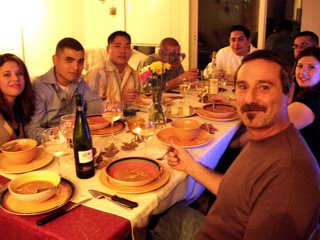
The final count was 18 sweet potatoes. The final count around the dinner table was 10.
Take the above scenario and repeat it for white potatoes for garlic roasted mashed potatoes. There were enough potatoes to feed, well, the Navy.
I’ve always felt, especially when preparing Thanksgiving dinner that it’s better to have too much than not enough. Now, that’s something to be thankful for.
Mashed Potatoes with Lemon-Thyme Butter
10 tablespoons butter at room temperature
4 teaspoons minced fresh thyme or 2 teaspoons dried
1 tablespoons minced lemon zest
4 pounds russet or Yukon gold potatoes, cubed
1 1/2 cups half-and-half
Mix the butter, thyme, and lemon zest in a small bowl. Season with salt and pepper. Place potatoes in a large pot and cover with cold water. Bring to a boil. Cover partially and cook until potatoes are very tender, about 20 minutes. Drain. Return potatoes to the same pot and mash. Heat half-and-half in a small saucepan over medium heat until hot; stir into potatoes. Set aside 2 tablespoons of the lemon-thyme butter. Mix remaining seasoned butter into potatoes. Season to taste with salt and pepper. Transfer mashed potatoes to a large bowl. Top with the remaining 2 tablespoons lemon-thyme butter and serve hot. Serves 10.
Thursday, June 30, 2005
I had a great title, but I forgot what it was.
I once read that as we age our brain cells die progressively at an alarming rate. Lately I can attest to that. The world around me has become increasingly puzzling. On a firsthand basis, I have made observations as to which brain cells die first.
1. The brain cells that control operating electronic equipment are the first to go. Just the other night I wanted to record a program on TV while I watched another. I sat staring at the remote. What do I have to do first?
“First I have to turn the TV to channel 3, then I have to find the VCR/DVD remote and turn it on, then I have to push the set up button, then I have to find out when the program starts and ends and then I have to push the timer button. Where is that tiny button?” I muttered to myself while fumbling with the remote control. If my daughter was around, she would have grabbed the remote, pressed a bunch of buttons with lightening speed and then handed it back to me everything all set.
2. The next brain cells to go are the ones that tell you what you are doing at the bottom of the stairs or at the top as the case may be. I spend half my day retracing steps so I can recall just what it was I came down the steps to get or do.
(This is cutting into my time of trying to remember where I put my coffee cup, store receipt, address book, camera, or car.)
3. Next to go is short term memory. This results in losing courses during dinner preparation and serving. This morning my husband went to heat up a muffin in the microwave and found last night’s green beans in a delightful basil and vinegar sauce.
4. The last brain cells to go are those that prioritize. In the last 10 years, my priorities have changed from pleasure, career, family, to career, family, pleasure and as we speak family, pleasure, career. This became evident as I recently shopped for a new car. As I sat across the desk from the car sales clerk I asked, “What are the safety features of this car?”
“It has a stereo with six speakers,” he told me.
“But does it have side air bags?” I asked again.
“There’s a switch on the cassette that boosts the bass,” he responded to some other imagined question.
“Yes, but I want to know if it’s a safe car.” I asked again.
“Oh, you want to know the safety features. Well, the car seats are treated with stain repellent,” he replied enthusiastically.
If you spot me driving down Main Street blasting my stereo, please excuse me and refer to item number 4, or was it number 3, of my list. And when you prepare the following recipe make a mental note to yourself to remove the dish from the microwave.
Potatoes Boulangere
If you have leftovers, these make great home fries the next morning.
2 tablespoons unsalted butter
4 tablespoons beef broth
2 unpeeled large (1 1/2 pounds) russet potato, scrubbed well and cut into 1/4-inch-thick slices
2 medium onions, sliced thin
Coarse salt and freshly ground black pepper to taste
In a 2-cup glass measure, combine the butter and the broth and microwave the mixture at high power (100%) for 1 minute, or until the butter is melted. In a medium microwave-safe bowl or casserole arrange one third of the potato slices, drained, in one layer, top them with one third of the onion slices, and layer the remaining vegetable slices in the same manner. Pour the butter mixture over the potato mixture and sprinkle the top with the salt and pepper to taste. Microwave the mixture, three fourths covered with microwave-safe plastic wrap, at high power (100%) for 10 to 12 minutes, or until the potatoes are tender. Serves 4.
1. The brain cells that control operating electronic equipment are the first to go. Just the other night I wanted to record a program on TV while I watched another. I sat staring at the remote. What do I have to do first?
“First I have to turn the TV to channel 3, then I have to find the VCR/DVD remote and turn it on, then I have to push the set up button, then I have to find out when the program starts and ends and then I have to push the timer button. Where is that tiny button?” I muttered to myself while fumbling with the remote control. If my daughter was around, she would have grabbed the remote, pressed a bunch of buttons with lightening speed and then handed it back to me everything all set.
2. The next brain cells to go are the ones that tell you what you are doing at the bottom of the stairs or at the top as the case may be. I spend half my day retracing steps so I can recall just what it was I came down the steps to get or do.
(This is cutting into my time of trying to remember where I put my coffee cup, store receipt, address book, camera, or car.)
3. Next to go is short term memory. This results in losing courses during dinner preparation and serving. This morning my husband went to heat up a muffin in the microwave and found last night’s green beans in a delightful basil and vinegar sauce.
4. The last brain cells to go are those that prioritize. In the last 10 years, my priorities have changed from pleasure, career, family, to career, family, pleasure and as we speak family, pleasure, career. This became evident as I recently shopped for a new car. As I sat across the desk from the car sales clerk I asked, “What are the safety features of this car?”
“It has a stereo with six speakers,” he told me.
“But does it have side air bags?” I asked again.
“There’s a switch on the cassette that boosts the bass,” he responded to some other imagined question.
“Yes, but I want to know if it’s a safe car.” I asked again.
“Oh, you want to know the safety features. Well, the car seats are treated with stain repellent,” he replied enthusiastically.
If you spot me driving down Main Street blasting my stereo, please excuse me and refer to item number 4, or was it number 3, of my list. And when you prepare the following recipe make a mental note to yourself to remove the dish from the microwave.
Potatoes Boulangere
If you have leftovers, these make great home fries the next morning.
2 tablespoons unsalted butter
4 tablespoons beef broth
2 unpeeled large (1 1/2 pounds) russet potato, scrubbed well and cut into 1/4-inch-thick slices
2 medium onions, sliced thin
Coarse salt and freshly ground black pepper to taste
In a 2-cup glass measure, combine the butter and the broth and microwave the mixture at high power (100%) for 1 minute, or until the butter is melted. In a medium microwave-safe bowl or casserole arrange one third of the potato slices, drained, in one layer, top them with one third of the onion slices, and layer the remaining vegetable slices in the same manner. Pour the butter mixture over the potato mixture and sprinkle the top with the salt and pepper to taste. Microwave the mixture, three fourths covered with microwave-safe plastic wrap, at high power (100%) for 10 to 12 minutes, or until the potatoes are tender. Serves 4.
Thursday, June 16, 2005
Down the Rabbit-Hole
I wonder if my parents felt the same sort of detachment from popular culture at that juncture in their lives as I now do.
I like to think of myself of fairly hip, but as I was watching TV the other night, everything seemed to be too loud and too fast for me.
Everyone is too wired, or actually wireless, to me. Cell phones, IPods, laptops. They’re talking about servers a lot in commercials, and they don’t mean waiters.
I have a computer, I surf the net, watch the news, listen to music, yet I feel somewhat out of step and disconnected to the mainstream.
Is this how my parents felt when rock ‘n roll took hold, and houses became homes to microwaves and cable television?
Recently, my daughter emailed and asked me to make a music CD for her. There wasn’t anyone on her list that I had heard of. The Ying Yang Twins, Gucci Mane, Pitbull, Bow Wow. If my daughter hadn’t told me these were singers, I would have thought her new interest was the Westminster Kennel Club.
Between the Christian far right, and Republican anti-everything (except oil and war), cell phones, and The Ying Yang Twins, I feel like a stranger in a strange land.
When I run into people I know, I find myself asking if they feel the same way. I’m looking for reassurance that the situation extends far wider than my itty bitty crcle.
Last night I shut the TV on a show that pretty much was a bunch of people yelling at each other. I sat down and opened up Alice in Wonderland. Maybe her story wasn’t a dream after all.
Alice’s Heart-Shape Cornmeal Biscuits
Perfect for that mad tea-party or picnic. No cell phones allowed.
1 1/4 cups flour
3/4 cup cornmeal
1/4 cup sugar
2 teaspoons baking powder
1/4 teaspoon baking soda
1/4 teaspoon salt
1/3 cup butter
1 teaspoon finely shredded lemon peel
2/3 cup buttermilk or sour milk
1 teaspoon vanilla
Sugar and cornmeal for sprinkling
In a medium mixing bowl, stir together flour, the 3/4 cup cornmeal, the 1/4 cup sugar, baking powder, baking soda, and salt. Using a pastry blender, cut in butter until mixture resembles coarse crumbs. Add lemon peel. Make a well in the center of dry mixture; set aside. In a small mixing bowl, combine buttermilk and vanilla; add to dry mixture all at once. Using a fork, stir just until moistened.
Turn dough out onto a lightly floured surface. Quickly knead by folding and pressing gently for 10 to 12 strokes or until dough is nearly smooth. Roll to 1/2-inch thickness. Cut dough with a floured 2-inch heart-shape biscuit or cookie cutter, dipping the cutter into flour between cuts.
Arrange biscuits so they are just touching on an ungreased baking sheet. Sprinkle with sugar and cornmeal. Bake in a 400° oven for 10 to 12 minutes or until golden brown. Remove from baking sheet; serve warm. Makes 12 to 15 biscuits.
I like to think of myself of fairly hip, but as I was watching TV the other night, everything seemed to be too loud and too fast for me.
Everyone is too wired, or actually wireless, to me. Cell phones, IPods, laptops. They’re talking about servers a lot in commercials, and they don’t mean waiters.
I have a computer, I surf the net, watch the news, listen to music, yet I feel somewhat out of step and disconnected to the mainstream.
Is this how my parents felt when rock ‘n roll took hold, and houses became homes to microwaves and cable television?
Recently, my daughter emailed and asked me to make a music CD for her. There wasn’t anyone on her list that I had heard of. The Ying Yang Twins, Gucci Mane, Pitbull, Bow Wow. If my daughter hadn’t told me these were singers, I would have thought her new interest was the Westminster Kennel Club.
Between the Christian far right, and Republican anti-everything (except oil and war), cell phones, and The Ying Yang Twins, I feel like a stranger in a strange land.
When I run into people I know, I find myself asking if they feel the same way. I’m looking for reassurance that the situation extends far wider than my itty bitty crcle.
Last night I shut the TV on a show that pretty much was a bunch of people yelling at each other. I sat down and opened up Alice in Wonderland. Maybe her story wasn’t a dream after all.
Alice’s Heart-Shape Cornmeal Biscuits
Perfect for that mad tea-party or picnic. No cell phones allowed.
1 1/4 cups flour
3/4 cup cornmeal
1/4 cup sugar
2 teaspoons baking powder
1/4 teaspoon baking soda
1/4 teaspoon salt
1/3 cup butter
1 teaspoon finely shredded lemon peel
2/3 cup buttermilk or sour milk
1 teaspoon vanilla
Sugar and cornmeal for sprinkling
In a medium mixing bowl, stir together flour, the 3/4 cup cornmeal, the 1/4 cup sugar, baking powder, baking soda, and salt. Using a pastry blender, cut in butter until mixture resembles coarse crumbs. Add lemon peel. Make a well in the center of dry mixture; set aside. In a small mixing bowl, combine buttermilk and vanilla; add to dry mixture all at once. Using a fork, stir just until moistened.
Turn dough out onto a lightly floured surface. Quickly knead by folding and pressing gently for 10 to 12 strokes or until dough is nearly smooth. Roll to 1/2-inch thickness. Cut dough with a floured 2-inch heart-shape biscuit or cookie cutter, dipping the cutter into flour between cuts.
Arrange biscuits so they are just touching on an ungreased baking sheet. Sprinkle with sugar and cornmeal. Bake in a 400° oven for 10 to 12 minutes or until golden brown. Remove from baking sheet; serve warm. Makes 12 to 15 biscuits.
Thursday, June 09, 2005
Save the whales
Yesterday, I received an email asking for my help. Apparently, the world’s last undisturbed gray whale birthing ground in Mexico is being threatened by plans for industrialization, oil and gas drilling, and high-rise hotels.
Since the last presidential election, responsibility has been placed in my hands to save the Democratic Party, put Tom DeLay in jail, and save the Alaskan wildlife from, well, to put it mildly, ignorance.
Throw in stem cell research, social security, the tsunami in Indonesia, and nuclear proliferation and I am looking at many sleepless nights.
I get mail from John Kerry, Robert Kennedy, Jr., and Hilary Clinton. I have tried to explain to them that I am just one person and there is just so much I can do. But, the mail keeps coming.
As soon as one issue seems to get resolved, another one surfaces. I have tried writing to my congressman, but either he is unaware of any problems, or he just giggles at my concerns. He thinks a whale is a fish that goes well with chardonnay.
I’m beside myself with worry. Actually, if I were beside myself I would get twice as much done with half the amount of worrying.
I’m thinking of forwarding these calls for help to some of my friends. As my congressman says, we have to keep stem cells alive and nuclear proliferation going.
Jerk Chicken
For the marinade:
2 cups finely chopped scallion
2 Scotch bonnet or habañero chilies, seeded, and minced (wear rubber gloves)
2 tablespoons soy sauce
2 tablespoons fresh lime juice
5 teaspoons ground allspice
3 teaspoons dry mustard
2 bay leaves, center ribs discarded and the leaves crumbled
2 garlic cloves, chopped
1 tablespoon salt
2 teaspoons sugar
1 1/2 teaspoons dried thyme, crumbled
1 teaspoon cinnamon
5 pounds chicken parts, the wing tips discarded
Vegetable oil for brushing the grill
Make the marinade: In a food processor or blender purée the scallion, 2 chilies, soy sauce, lime juice, allspice, dry mustard, bay leaves, garlic, salt, sugar, thyme, and cinnamon.
Divide the chicken parts between 2 heavy-duty resealable plastic bags and spoon the marinade over them, coating them well. Seal the bags, pressing out the excess air, and let the chicken marinate, chilled, turning the bags over several times, for at least 24 hours and up to 2 days.
On an oiled rack set 4 to 6 inches over glowing coals grill the chicken, in batches if necessary, and covered if possible, for 10 to 15 minutes on each side, or until it is cooked through. Transfer the chicken as it is cooked with tongs to a heated platter; keep it warm, covered loosely with foil. Serves 10.
Since the last presidential election, responsibility has been placed in my hands to save the Democratic Party, put Tom DeLay in jail, and save the Alaskan wildlife from, well, to put it mildly, ignorance.
Throw in stem cell research, social security, the tsunami in Indonesia, and nuclear proliferation and I am looking at many sleepless nights.
I get mail from John Kerry, Robert Kennedy, Jr., and Hilary Clinton. I have tried to explain to them that I am just one person and there is just so much I can do. But, the mail keeps coming.
As soon as one issue seems to get resolved, another one surfaces. I have tried writing to my congressman, but either he is unaware of any problems, or he just giggles at my concerns. He thinks a whale is a fish that goes well with chardonnay.
I’m beside myself with worry. Actually, if I were beside myself I would get twice as much done with half the amount of worrying.
I’m thinking of forwarding these calls for help to some of my friends. As my congressman says, we have to keep stem cells alive and nuclear proliferation going.
Jerk Chicken
For the marinade:
2 cups finely chopped scallion
2 Scotch bonnet or habañero chilies, seeded, and minced (wear rubber gloves)
2 tablespoons soy sauce
2 tablespoons fresh lime juice
5 teaspoons ground allspice
3 teaspoons dry mustard
2 bay leaves, center ribs discarded and the leaves crumbled
2 garlic cloves, chopped
1 tablespoon salt
2 teaspoons sugar
1 1/2 teaspoons dried thyme, crumbled
1 teaspoon cinnamon
5 pounds chicken parts, the wing tips discarded
Vegetable oil for brushing the grill
Make the marinade: In a food processor or blender purée the scallion, 2 chilies, soy sauce, lime juice, allspice, dry mustard, bay leaves, garlic, salt, sugar, thyme, and cinnamon.
Divide the chicken parts between 2 heavy-duty resealable plastic bags and spoon the marinade over them, coating them well. Seal the bags, pressing out the excess air, and let the chicken marinate, chilled, turning the bags over several times, for at least 24 hours and up to 2 days.
On an oiled rack set 4 to 6 inches over glowing coals grill the chicken, in batches if necessary, and covered if possible, for 10 to 15 minutes on each side, or until it is cooked through. Transfer the chicken as it is cooked with tongs to a heated platter; keep it warm, covered loosely with foil. Serves 10.
Thursday, May 26, 2005
The crisp and crumbling cruller
I don’t see what the fuss is about with Krispy Kreme doughnuts. To me, they are on a par with Wonderbread white bread: all fluff, no substance. (That’s good; I just killed two brand names in one paragraph. I should be hearing from them soon.)
If I’m going to go off my diet and indulge in something sweet to accompany my coffee, it’s going to be something more substantial. It’s going to be either a Danish or a cruller.
We all are familiar with Danishes; that luscious pastry filled with cheese, almonds, or fruit fillings. I’ll take cherry or prune, thank you.
Crullers are another story. I’ve seen them in various forms. Sometimes a cruller is a doughnut dough leavened with yeast or baking powder that’s shaped into a long twist, deep fried and sprinkled with sugar or glazed with a thin icing. The traditional French cruller, looks like a tractor-tire, is made from pate a choux, and is basically hollow.
I never feel that satisfied after eating a French cruller. However, the twisty doughnut cruller, when made well, is absolutely scrumptious.
The fried cake-like cruller has Dutch origins. Indeed, the word “cruller” comes from the Dutch krulle, meaning “twisted cake.” The Dutch brought them to NY and there is mention of them in 1818 in Washington Irving’s “The Legend of Sleepy Hollow.” “The doughty dough-nut… the crisp and crumbling cruller.”
However, you will find cruller-like recipes in just about every ethnic cuisine, from Italian zeppole, to Mexican churros, to Chinese deep-fried devils.
A cruller by any name will taste as sweet.
Dutch Crullers
1 cup warm milk
1 package dry yeast
1 teaspoon salt
2 tablespoons granulated sugar
3 1/2 cups all-purpose flour, plus more, as needed, divided use
1/4 cup melted butter
1 cup light brown sugar
2 eggs, well beaten
1/2 teaspoon freshly ground nutmeg
1 (48-ounce) bottle, or more, vegetable oil for frying
Granulated sugar for sprinkling
In a medium bowl, sprinkle yeast over milk and let rest 5 minutes. Add salt, granulated sugar and 2 cups flour. Beat thoroughly. Cover and let rise until double in bulk, about 1 hour.
Stir down and add butter, brown sugar, eggs, nutmeg, and 1 cup flour. Beat well, cover, and let rise again until almost double in bulk.
Stir down again, and turn out onto lightly floured board, kneading in only enough flour so it handles easily. Let rest 10 minutes, then roll or pat out about 1/3 inch thick. Cut in 3/4-inch-wide, 8-inch-long strips. Let rise, uncovered, about 1 hour. Twist each strip several times and pinch ends.
Pour oil into deep-fat fryer or large, straight-sided saucepan to a depth of 2 to 3 inches. Heat oil to 375°. Line baking sheet or plate with paper towels.
Fry doughnuts, 4 at time, turning once, 2 to 3 minutes, or until golden brown. Using slotted spoon, transfer to paper towels to drain, and then place on wire rack to cool completely.
When doughnuts are cool, sprinkle with sugar. Makes about 3 dozen crullers.
This recipe does not use yeast, and therefore there is less “rising time.”
Fried Cruller Bows
1 1/4 cups all-purpose flour
3 tablespoons confectioners’ sugar
2 tablespoons granulated sugar
1/2 teaspoon salt
1 large whole egg
2 egg whites
1 teaspoon vanilla extract
Vegetable oil for frying
Confectioners’ sugar ground cinnamon for sprinkling
Combine flour, 3 tablespoons confectioners’ sugar, and salt in a small bowl. Stir in whole egg, the egg whites, and vanilla extract with fork until mixture is crumbly.
Form dough into a ball; knead on lightly floured surface until smooth, about 5 minutes. Cover loosely; let stand about 30 minutes.
Heat 2 inches of oil to 375° in a large heavy saucepan. Roll dough on floured surface to a 12-inch square, about 1/8-inch thick. Cut into 12 (1-inch) strips; cut strips in half to form 24 (6x1-inch) strips. Tie each strip into a knot.
Fry knots in oil, a few at a time, 3 to 4 minutes or until golden. Drain on paper towels. Sprinkle with confectioners’ sugar and cinnamon. Serve warm. Makes 24 crullers.
If I’m going to go off my diet and indulge in something sweet to accompany my coffee, it’s going to be something more substantial. It’s going to be either a Danish or a cruller.
We all are familiar with Danishes; that luscious pastry filled with cheese, almonds, or fruit fillings. I’ll take cherry or prune, thank you.
Crullers are another story. I’ve seen them in various forms. Sometimes a cruller is a doughnut dough leavened with yeast or baking powder that’s shaped into a long twist, deep fried and sprinkled with sugar or glazed with a thin icing. The traditional French cruller, looks like a tractor-tire, is made from pate a choux, and is basically hollow.
I never feel that satisfied after eating a French cruller. However, the twisty doughnut cruller, when made well, is absolutely scrumptious.
The fried cake-like cruller has Dutch origins. Indeed, the word “cruller” comes from the Dutch krulle, meaning “twisted cake.” The Dutch brought them to NY and there is mention of them in 1818 in Washington Irving’s “The Legend of Sleepy Hollow.” “The doughty dough-nut… the crisp and crumbling cruller.”
However, you will find cruller-like recipes in just about every ethnic cuisine, from Italian zeppole, to Mexican churros, to Chinese deep-fried devils.
A cruller by any name will taste as sweet.
Dutch Crullers
1 cup warm milk
1 package dry yeast
1 teaspoon salt
2 tablespoons granulated sugar
3 1/2 cups all-purpose flour, plus more, as needed, divided use
1/4 cup melted butter
1 cup light brown sugar
2 eggs, well beaten
1/2 teaspoon freshly ground nutmeg
1 (48-ounce) bottle, or more, vegetable oil for frying
Granulated sugar for sprinkling
In a medium bowl, sprinkle yeast over milk and let rest 5 minutes. Add salt, granulated sugar and 2 cups flour. Beat thoroughly. Cover and let rise until double in bulk, about 1 hour.
Stir down and add butter, brown sugar, eggs, nutmeg, and 1 cup flour. Beat well, cover, and let rise again until almost double in bulk.
Stir down again, and turn out onto lightly floured board, kneading in only enough flour so it handles easily. Let rest 10 minutes, then roll or pat out about 1/3 inch thick. Cut in 3/4-inch-wide, 8-inch-long strips. Let rise, uncovered, about 1 hour. Twist each strip several times and pinch ends.
Pour oil into deep-fat fryer or large, straight-sided saucepan to a depth of 2 to 3 inches. Heat oil to 375°. Line baking sheet or plate with paper towels.
Fry doughnuts, 4 at time, turning once, 2 to 3 minutes, or until golden brown. Using slotted spoon, transfer to paper towels to drain, and then place on wire rack to cool completely.
When doughnuts are cool, sprinkle with sugar. Makes about 3 dozen crullers.
This recipe does not use yeast, and therefore there is less “rising time.”
Fried Cruller Bows
1 1/4 cups all-purpose flour
3 tablespoons confectioners’ sugar
2 tablespoons granulated sugar
1/2 teaspoon salt
1 large whole egg
2 egg whites
1 teaspoon vanilla extract
Vegetable oil for frying
Confectioners’ sugar ground cinnamon for sprinkling
Combine flour, 3 tablespoons confectioners’ sugar, and salt in a small bowl. Stir in whole egg, the egg whites, and vanilla extract with fork until mixture is crumbly.
Form dough into a ball; knead on lightly floured surface until smooth, about 5 minutes. Cover loosely; let stand about 30 minutes.
Heat 2 inches of oil to 375° in a large heavy saucepan. Roll dough on floured surface to a 12-inch square, about 1/8-inch thick. Cut into 12 (1-inch) strips; cut strips in half to form 24 (6x1-inch) strips. Tie each strip into a knot.
Fry knots in oil, a few at a time, 3 to 4 minutes or until golden. Drain on paper towels. Sprinkle with confectioners’ sugar and cinnamon. Serve warm. Makes 24 crullers.
Thursday, October 14, 2004
The Vulgaris Beet
One of my favorite vegetables is in season right now. If you think of a tin can when you think of beets, then you haven't experienced beets in all their glory.
When you purchase a bunch of fresh beets from the local farmstand or in the produce department of your grocer, you are taking home a truly versatile vegetable.
Beets can be eaten raw, grated into a salad or slaw, covered with water and boiled in a saucepan, roasted in the oven, or pickled. I have even seen them made into cakes and ice cream! The green tops can be cooked separately in a little water and served like spinach.
Like many people growing up in the city in the 50s, the only beets I tasted were out of a can. They were quite bland and not at all memorable. Years later, while traveling through Europe I was served fresh beets, and they were an entirely different story. Beets are much more popular in Europe, and I looked for them in Germany, Belgium, and Scandinavia. I tasted them in soups, relishes, and pies. They were wonderful, and I’ve been hooked ever since.
Related to Swiss chard, spinach, and the sugar beet, the common garden beet (beta vulgaris) was initially developed from a leafy Mediterranean plant.
Ancient Romans ate only the leaves. Later on, they bravely nibbled on the bulbs. Nineteenth century horticulturists developed the fleshy globe-shaped roots familiar to us today.
In recent years, these beets have been crossbred with sugar beets to give them more sweetness.
In addition to red beets, there are golden-yellow, and pink-and-white-ringed beets. You can find seeds to grow these yellow and white beets in seed catalogs. These are good choices to grow alongside red beets as they won’t tint other ingredients if used in salads and other mixed vegetable dishes.
I happen to love the color, though you have to be careful when cleaning beets, lest your kitchen look like a crime scene.
The best way to cook and clean beets are to scrub them in the sink, nip off the roots and leaves about 2-inches from the root. Be careful not to break the tender skin of the beet, or the rich red juice will be lost in cooking. Cover the beets with water and boil for about 45 minutes.
After they are cooked, drain them and peel them under cool running water by rubbing them (you can do this with paper towels to avoid staining your fingers). The skins should slip right off.
Beetroot Chutney
I found this recipe in a little Scottish cookbook during my travels. This makes a colorful tasty relish to serve alongside roast turkey or baked ham. This recipe calls for a lot of sugar. I feel that halving the amount of sugar would not harm this recipe at all.
3 pounds beetroot
2 pounds apples
2 onions
1 pint vinegar
1/2 teaspoon salt
1 teaspoon ground ginger
2 pounds sugar
1 lemon
Wash the beets, and boil unpeeled for 1 1/2 hours. Allow to cool in the water, then peel them and cut into small cubes. Peel and chop the apples and onions. Squeeze the juice from the lemon. Put the apples and onions into a pan with the vinegar, lemon juice, sugar, salt, and ginger. Boil for 20 minutes. Add the beetroot cubes and cook for another 20 minutes. Allow to cool; spoon into hot, sterilized jars and seal. Makes about 4 pints.
Hot Spicy Shredded Beets
2 pounds beets, trimmed, peeled, and coarsely grated
1/2 cup coarsely grated onion
3 tablespoons butter or margarine
1/2 cup water
1/4 cup dry red wine
Juice of 1/2 lemon
1/4 teaspoon cinnamon
1/4 teaspoon nutmeg
1/2 teaspoon salt
1/8 teaspoon pepper
Simmer all ingredients, covered, 25 to 30 minutes until beets are tender and flavors well blended. Stir once or twice during cooking.
Serves 4.
Baby Beets with Beet Greens
Select young beets when they are not larger than a shallot; the tops will then be just the right age to be tender and sweet. Wash thoroughly in running water. Be careful not to break the skin of the beet, or the rich red juice will be lost in cooking.
Put them in enough slightly salted boiling water to well cover them and boil quickly until tender; it should require from thirty to forty-five minutes. Take them out of the pot when done and plunge the beets only, not the tops, into very cold water; the skins will very readily rub off with the fingers.
Drain the greens and cut them up, not too fine; add plenty of melted butter, a tablespoonful of vinegar or lemon juice, and salt and pepper to taste.
Mix lightly with a fork, arrange them on a shallow dish or platter, cut the beets in halves, and lay them in a border around the greens. To make the dish more ornamental the beets may be alternated with slices of hardboiled egg. Serve with the following sour cream dressing, or any mayonnaise-based dressing of your choice. Ranch dressing is a good choice.
Sour Cream Dressing
1/2 pint sour cream
2 tablespoons lemon juice
2 tablespoons vinegar
1 scant tablespoon sugar
1 teaspoon salt
1/4 teaspoon pepper
1 teaspoon or to taste prepared mustard
Stir the sour cream until smooth. Gradually add the remaining ingredients, mixing well as you do so.
When you purchase a bunch of fresh beets from the local farmstand or in the produce department of your grocer, you are taking home a truly versatile vegetable.
Beets can be eaten raw, grated into a salad or slaw, covered with water and boiled in a saucepan, roasted in the oven, or pickled. I have even seen them made into cakes and ice cream! The green tops can be cooked separately in a little water and served like spinach.
Like many people growing up in the city in the 50s, the only beets I tasted were out of a can. They were quite bland and not at all memorable. Years later, while traveling through Europe I was served fresh beets, and they were an entirely different story. Beets are much more popular in Europe, and I looked for them in Germany, Belgium, and Scandinavia. I tasted them in soups, relishes, and pies. They were wonderful, and I’ve been hooked ever since.
Related to Swiss chard, spinach, and the sugar beet, the common garden beet (beta vulgaris) was initially developed from a leafy Mediterranean plant.
Ancient Romans ate only the leaves. Later on, they bravely nibbled on the bulbs. Nineteenth century horticulturists developed the fleshy globe-shaped roots familiar to us today.
In recent years, these beets have been crossbred with sugar beets to give them more sweetness.
In addition to red beets, there are golden-yellow, and pink-and-white-ringed beets. You can find seeds to grow these yellow and white beets in seed catalogs. These are good choices to grow alongside red beets as they won’t tint other ingredients if used in salads and other mixed vegetable dishes.
I happen to love the color, though you have to be careful when cleaning beets, lest your kitchen look like a crime scene.
The best way to cook and clean beets are to scrub them in the sink, nip off the roots and leaves about 2-inches from the root. Be careful not to break the tender skin of the beet, or the rich red juice will be lost in cooking. Cover the beets with water and boil for about 45 minutes.
After they are cooked, drain them and peel them under cool running water by rubbing them (you can do this with paper towels to avoid staining your fingers). The skins should slip right off.
Beetroot Chutney
I found this recipe in a little Scottish cookbook during my travels. This makes a colorful tasty relish to serve alongside roast turkey or baked ham. This recipe calls for a lot of sugar. I feel that halving the amount of sugar would not harm this recipe at all.
3 pounds beetroot
2 pounds apples
2 onions
1 pint vinegar
1/2 teaspoon salt
1 teaspoon ground ginger
2 pounds sugar
1 lemon
Wash the beets, and boil unpeeled for 1 1/2 hours. Allow to cool in the water, then peel them and cut into small cubes. Peel and chop the apples and onions. Squeeze the juice from the lemon. Put the apples and onions into a pan with the vinegar, lemon juice, sugar, salt, and ginger. Boil for 20 minutes. Add the beetroot cubes and cook for another 20 minutes. Allow to cool; spoon into hot, sterilized jars and seal. Makes about 4 pints.
Hot Spicy Shredded Beets
2 pounds beets, trimmed, peeled, and coarsely grated
1/2 cup coarsely grated onion
3 tablespoons butter or margarine
1/2 cup water
1/4 cup dry red wine
Juice of 1/2 lemon
1/4 teaspoon cinnamon
1/4 teaspoon nutmeg
1/2 teaspoon salt
1/8 teaspoon pepper
Simmer all ingredients, covered, 25 to 30 minutes until beets are tender and flavors well blended. Stir once or twice during cooking.
Serves 4.
Baby Beets with Beet Greens
Select young beets when they are not larger than a shallot; the tops will then be just the right age to be tender and sweet. Wash thoroughly in running water. Be careful not to break the skin of the beet, or the rich red juice will be lost in cooking.
Put them in enough slightly salted boiling water to well cover them and boil quickly until tender; it should require from thirty to forty-five minutes. Take them out of the pot when done and plunge the beets only, not the tops, into very cold water; the skins will very readily rub off with the fingers.
Drain the greens and cut them up, not too fine; add plenty of melted butter, a tablespoonful of vinegar or lemon juice, and salt and pepper to taste.
Mix lightly with a fork, arrange them on a shallow dish or platter, cut the beets in halves, and lay them in a border around the greens. To make the dish more ornamental the beets may be alternated with slices of hardboiled egg. Serve with the following sour cream dressing, or any mayonnaise-based dressing of your choice. Ranch dressing is a good choice.
Sour Cream Dressing
1/2 pint sour cream
2 tablespoons lemon juice
2 tablespoons vinegar
1 scant tablespoon sugar
1 teaspoon salt
1/4 teaspoon pepper
1 teaspoon or to taste prepared mustard
Stir the sour cream until smooth. Gradually add the remaining ingredients, mixing well as you do so.
Thursday, October 07, 2004
Crustless in the Catskills
Here is an example of how crazy the weather has been this year: This past weekend I started to prepare my garden for the upcoming colder weather; cutting back perennials, piling on mulch, etc. I arrived at my rhubarb patch, and lo and behold, there was a new crop of rhubarb ready for picking.
Not to look a gift horse in the mouth, I picked all the stalks I could and brought them in the house to make a cobbler.
I didn’t get any zucchini this summer (now, that’s really strange), but I got two crops of rhubarb. That’s just plain crazy!
The monsoon we experienced July, August, and September, seemed to have had a positive effect on apple tree growth. The apples this year are scrumptious.
I love stopping at local farmstands and loading up on a variety of apples. My favorite is the Macoun, but my new second favorite is the gala. Not only are they just so pretty with red, orange, and yellow blending together, but also they’re crisp and delicious.
Trying to avoid pie-making (not an easy thing to do), I’m on the lookout for other ways to sweeten my life with apples.
I make a mean mulligatawny soup using apples and curry. Acorn squash stuffed with chopped apples, a little cinnamon, and a drizzling of maple syrup is an autumn favorite. Don’t even get me started on the attributes of apple and peanut butter. With apples around, who needs pie crust!
Apple Ratatouille
Here is a variation on traditional ratatouille. This would also made a delicious filling for acorn squash. Just slice the squash in half, par-cook it in a pan with an inch of water until it is softened. Turn it over, drain the water out, and fill the hollows with a few spoonfuls of apple ratatouille. Put it back in the oven for another 20 minutes or so to heat through.
3 tablespoons olive oil
1 large onion, sliced
4 garlic cloves
2 teaspoons dried basil
1 teaspoon oregano
1/2 teaspoon ground allspice
1/4 teaspoon ground black pepper
2 bell peppers, sliced
2 medium zucchini, sliced
6 ripe tomatoes, quartered
2 medium cooking apples, diced
Heat olive oil in a large skillet and add onion. Crush garlic directly into skillet and sauté for 5 minutes. Sprinkle in basil, oregano, allspice, and black pepper. Stir bell peppers into onions, and sauté for 10 minutes. Add zucchini and tomatoes to the skillet. Stir, cover, and simmer for 20 minutes. Add apples to the ratatouille, cover, and simmer for 15 minutes. Serve hot.
Serves 8.
Grated Apple Fritters
For a real autumn taste, drizzle these with some maple syrup.
1 large cooking apple
2 large eggs
1/2 cup flour (you can use whole wheat or white, or a mixture of the both)
1/2 teaspoon baking powder
1/2 teaspoon baking soda
1/2 teaspoon ground nutmeg
1/2 teaspoon ground cinnamon
Butter, margarine, or vegetable oil for frying
Powdered sugar and whipped cream for garnish, optional
Peel, core, and grate apple into a medium-size bowl. Separate the eggs. Drop the whites into a large bowl, the yolks into a small bowl. Whisk yolks until light and stir into grated apple. Add flour, baking powder, baking soda, and spices; stir to combine.
Beat egg whites until stiff and fold into apple mixture. Heat butter, margarine, or vegetable oil, 1/4-inch deep, in a hot skillet. Drop batter by heaping tablespoonful into hot fat. Cook for 1 minute, turn, and cook 1 minute more. The fritters should be golden brown. Drain on paper toweling, and serve immediately or keep warm in a low oven. Serve with a dusting of powdered sugar, and/or a little bit of whipped cream.
Serves 2-4.
Thursday, September 30, 2004
Sandwich Accoutrements
Since switching to low-carb bread, I have found that my sandwich is in need of a little help in the flavor department. Scanning the condiment aisle in the local supermarket, I have come across many trendy flavored mayonnaise dressings. Basically what you are spending top dollar for is plain ole mayonnaise mixed with horseradish, or wasabi, or relish, or you name it.
I thought, hey, I could do that at home for a fraction of the cost.
With the money I saved, I purchased jars of hot pepper slices, thinly sliced pickles and a good jar of Dijon mustard.
I load my tasteless low-carb bread with assorted healthy cold cuts, slices of hot peppers and pickles, and a choice of my very own gourmet dressing. Remember, these are great on any kind of sandwich or wrap. This is what I came up with.
Cha-Cha-Cha Salsa Mayonnaise
Stir 1/2 cup your favorite salsa (drain the liquid) into 1 cup mayonnaise.
Neigh-Sayer Horseradish-Dill Mustard
Stir 1 tablespoon horseradish and 1 tablespoon chopped fresh dill into 1 cup Dijon mustard.
Bee-Bee King Honey Mustard
Stir 2 tablespoons honey into 1 cup Dijon mustard.
Special Sauce Mustard Mayonnaise
Stir together 1/2 cup grainy mustard with 1/2 cup mayonnaise until well blended.
Something Fishy Sandwich Sauce
This makes a whole lot. Just store it in a container in the refrigerator. Not just for fried fish filet sandwiches, this is great on hamburgers, hot dogs, and roast beef sandwiches.
1/2 of a red onion
1 small green bell pepper (and I mean small)
2 stalks celery, leaves as well
1 tablespoon chopped garlic, maybe more
2 teaspoons salt
1 tablespoon coarsely ground black pepper.
1 teaspoon cayenne pepper,
2 teaspoons paprika
1/4 cup spicy mustard
2 1/2 cups mayonnaise
1 1/2 tablespoons catsup
1 tablespoon Worcestershire sauce
One to two jalapeño peppers, chopped (to taste)
1 tablespoon Tabasco, or your favorite hot sauce, or to taste
Juice of half a lemon or lime
1/4 cup chopped fresh parsley
Process all ingredients in a food processor until quite smooth. Drizzle in white vinegar until the mixture is spreading consistency. You can change amounts to suit your taste. I like mine spicy.
This is as good a time as any to post an update on my low-carb diet. I started this diet at the end of March. The first two weeks, I kept to it very strictly. About end of July, I reintroduced bread, brown rice, and fruit into my diet. I use low-carb bread, or make my own whole-grain breads. When I have a bagel in the morning, I make it a whole-wheat one and have only 1/2 of a bagel. I haven’t had pasta since March, nor sugar in my coffee. However, I do make cakes and muffins substituting half the sugar with a sugar substitute.
So, all and all, I’m not fanatical about it being low, low-carb. However, I am more aware of what I eat now, and I think I make better food decisions.
That being said, since the end of March I have lost 23 pounds and I feel great. I also think if I could do it, anyone can do it. If you use the low-carb premise of reducing white, processed flour products, and sugar from your diet, and use common sense, you can definitely drop at least 10 pounds in a couple of months. If you add an hour of exercise a day (which I admit, I haven’t), you can lose much more.
Thursday, September 23, 2004
You Said a Little Mouthful!
A favorite early autumn treat is a plate of thickly sliced fresh tomato, layered with slices of fresh mozzarella, fresh basil leaves and a drizzle of extra-virgin olive oil.
The tomatoes and basil are from my garden, and the mozzarella and olive oil are from a foray to Brooklyn or the Bronx.
Fresh mozzarella is different from the regular packaged mozzarella. When you go to a deli in NYC, you will find them in either little balls, called bocconcini (translated as “little mouthfuls”), or assorted shapes of about one pound, floating in lightly salted water. Sometimes if you are lucky, you will get to watch them making it right then and there.
Authentic fresh mozzarella, (buffalo mozzarella), originated in the southern Italian region of Campania, and is made from the milk of the water buffalo. The water buffalo was introduced from India to Italy in the 16th century for farmwork. Fresh mozzarella is best eaten uncooked and the same day it is purchased.
Low-moisture mozzarella is the type most often found packaged in supermarkets. It is made from whole, part-skim, or skim milk, formed into a block, and cut into half-pound or one-pound rectangles.
Most small producers who make the cheese by hand offer only the whole milk type, still not a very fattening cheese at 100 calories per ounce.
It takes five quarts of milk to produce a single pound of curd. When the curd is made for mozzarella, the whey that is drained off is used to make ricotta cheese. This is why most commercial producers make both mozzarella and ricotta cheese.
Low-moisture mozzarella is excellent for cooking. You will also find low-moisture mozzarella formed into sticks, string, or braids, as well as filled with prosciutto or pepperoni and rolled up jelly roll-style. Slice these and serve on cheese trays as appetizers. Unusual variations are flavored with black peppercorns or pistachios, smoked, or marinated with olive oil and red pepper.
Once considered a poor man’s food, mozzarella is placed up on a pedestal in my house. This mild-flavored cheese makes fresh, ripe tomatoes sing.
Caprese Mozzarella and Tomato Salad
4 cups mixed greens
4 large beefsteak tomatoes, sliced
4 yellow tomatoes, sliced
1 cup fresh basil leaves
8 ounces fresh mozzarella balls, sliced
Salt
Pepper
1/4 cup extra-virgin olive oil
Place greens on large serving platter. Place tomatoes and mozzarella in a concentric circle, alternating with red tomato, yellow tomato, mozzarella slice, and so on. Place basil leaves on top. Sprinkles with salt and pepper to taste, and drizzle with olive oil.
Serves 8.
Fresh Mozzarella Filled with Spinach and Roasted Peppers
4 ounces fresh mozzarella cheese
3/4 pound fresh spinach, steamed
2 roasted red peppers sliced lengthwise
2 cups mixed salad greens
2 tomatoes, sliced
1 tablespoon balsamic vinegar
1 tablespoon extra-virgin olive oil
Flatten fresh mozzarella to 1/2-inch thickness. Layer with spinach, and roasted peppers. Roll up jellyroll fashion from longest end. Slice and serve with greens and tomato slices drizzled with balsamic vinegar and olive oil.
Serves 4.
Subscribe to:
Posts (Atom)